

In a recent BBC news article, an anonymous reporter writes about the misguided attempts of an activist to rescue an imprisoned lobster in a Weymouth restaurant (Catch at the Old Fish Market). The article states the rescuer misidentified the crayfish as a lobster, that the animal died instantly on release into the ocean due to temperature differences, and get this, that a remaining un-liberated crayfish “died of loneliness” the next day! The extreme animal cruelty of imprisoning, then boiling alive lobsters aside, the depravity and inaccuracy of this biased reporting is remarkable, even in this day and age.
Really! You cannot make this stuff up!
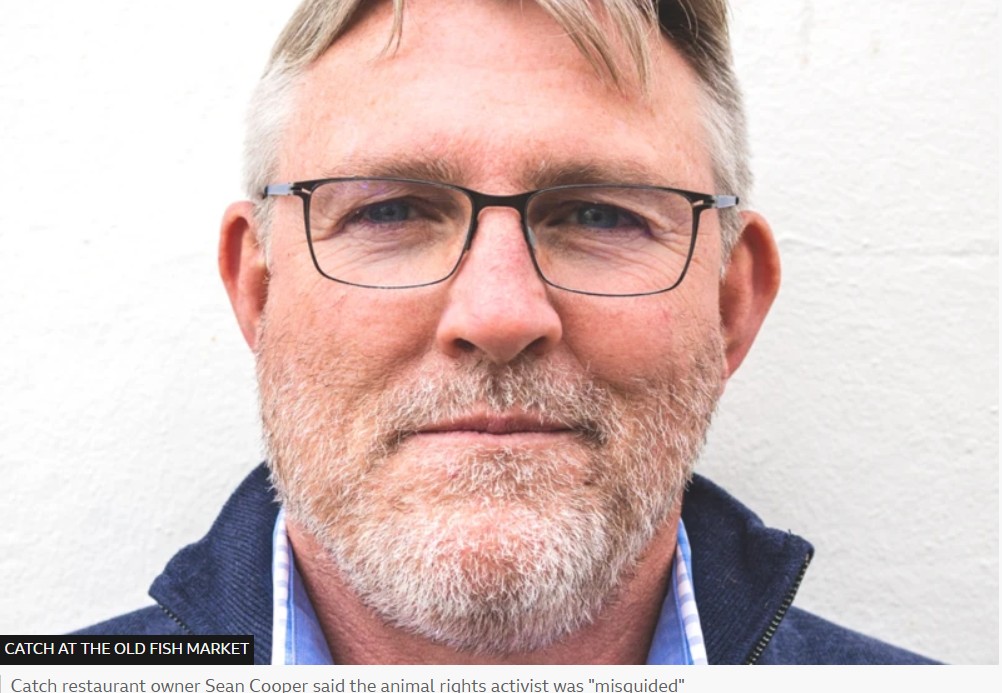
Sean Cooper
(1) The purported rescuer was a marine biologist, who presumably knows a LOT more about crustaceans than a restaurateur, who states the imprisoned animals came from local fishermen. That has to mean the “crayfish”, as he labels them, came from the nearby sea. Problem is, crayfish are fresh-water inhabitants, and lobsters live in salt-water like that near Weymouth. Oops! They were lobsters, (owner) Sean Cooper. Not crayfish. Later the reporter adds the lobsters were “crustaceans, nicknamed Ronnie and Reggie, [and] were Mediterranean species caught in the English Channel and donated to the restaurant.
(2) Sean also states for the media hit piece that he had no intention of killing the lobsters, and had kept them in their tiny tank for 2 years as pets, or wait, for “educational purposes”. Well! Keeping 2 wild lobsters in a tank for 2 years isn’t much better than just killing them right away. What was the plan, Sean, let them die of old age? Does Sean know lobsters typically live 50-100 years in the wild, and can migrate dozens of kilometers? Is a small tank for 50 years better or worse than being boiled alive today?
(3) Going out on a limb here, but I’m pretty skeptical Reggie (or was it Ronnie who remained behind?) died of a broken heart. More likely Sean decided to cash in with a lobster meal before the remaining prisoner was set free as well.
Meanwhile, the marine biologist-rescuer has emphasised how carefully she placed the animal in the harbour, and that the judge in court recognised this. This jars with widely publicised but unsubstantiated claims from the restaurant’s owner: Smart “threw” the lobster “like a cricket ball”, and it would have likely died of shock upon entering the sea. Smart refutes this, saying that she has no reason to believe that it couldn’t be “living its best natural lobster life” back where it was caught roughly 10 miles down the coast.
Marine biologist Emma Smart was initially charged with causing unnecessary suffering to a protected animal, theft, and assault, but prosecutors accepted a plea to the lesser offence of criminal damage without the owner’s input. She received an eight-month conditional discharge and a three-year restraining order keeping her away from the restaurant.