

 by: Amanda Rhoades
KOIN6 News
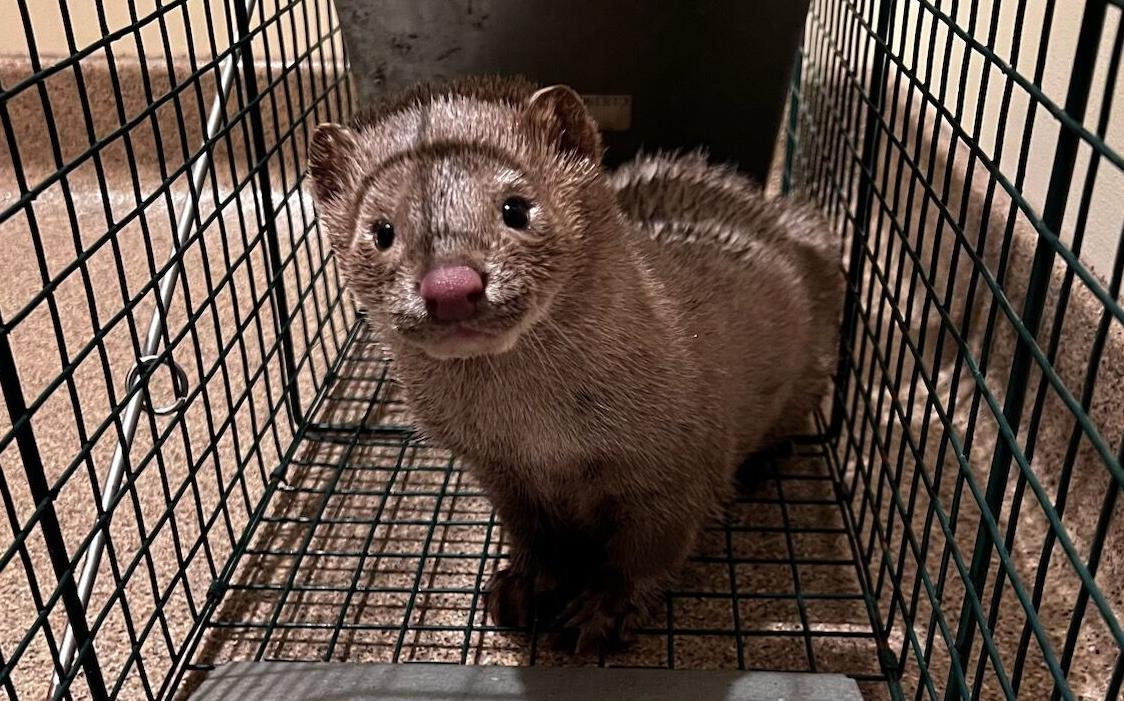
PORTLAND, Ore. (KOIN) — After a late-night break-in last week led to the escape of 1,500 mink from an Oregon farm, some animal rights activists say more intrusions could be on the way.
The Animal Liberation Front, a decentralized group of extremist animal rights advocates known for sabotage, vandalism and even arson, has claimed responsibility in a press release shared on its website for the Aug. 13 break-in at Cascade Farms of Oregon mink farm in Turner, Oregon.
That claim has been unconfirmed by officials. The Federal Bureau of Investigation’s Portland office declined to comment on whether it is investigating the break-in.
The Marion County Sheriff’s Office said there have been no arrests related to the case, and they have no information indicating the ALF’s involvement.
The owner of Cascade Farms of Oregon, Randy Lucas, did not respond to multiple phone calls seeking comment about the break-in. Cascade Farms was established by Lucas’ father, John Lucas, as a meat business and ranch in 1980. The meat business has since closed, and John Lucas passed away, but the ranch remains in business.
But Joseph Buddenberg, a former member of the Animal Liberation Front, said the break-in at Cascade Farm in Turner is consistent with an ALF action. Jerry Vlasak from the North American Animal Liberation press office, which represents the ALF in North America, also said it was consistent with an ALF action but has not received an anonymous communique taking credit for the action. Vlasak also said communiques are often submitted by activists days or even weeks after an event but sometimes aren’t sent at all.
“There have been over 100 fur farm raids in the United States dating back to the 1990s,” Buddenberg said. “Cutting the fences, opening cages, and destroying breeding records have been tactics historically utilized by the ALF.”
Buddenberg pleaded guilty in 2016 to conspiracy to violate the Animal Enterprise Terrorism Act after he and a partner were accused of terrorizing the fur industry during cross-country road trips. He has since completed his sentence and said he hopes speaking out can help people understand why activists go to such extreme lengths.
“Every summer we see activists break in to free mink from farms,” he said. “Every November, they’re pelted.”
Farmed mink are typically bred and raised early in the year until around November, when they’re harvested for their pelts, which are sold for luxury fur apparel and other items. The industry generated $28.1 million in pelts in 2024, according to the U.S. Department of Agriculture’s Mink Survey.
Humanely certified operations use carbon monoxide gas, which immediately renders them unconscious and ensures they die quickly and without pain, according to the trade organization Fur Commission USA. The group estimates there are approximately 275 mink farms in 23 states across the U.S., and has said mink that are released often don’t survive.
Buddenberg disagreed.
“If they stayed on the farm, they’d have a 100% death rate,” he said. “Release at least gives them a chance at survival. Fur farmers should definitely expect to see more of this before November.”
Despite his previous felony conviction and time served, Buddenberg remains steadfast in his views.
“Opening cages and freeing these animals is the most compassionate thing you can do,” he said. “My mind hasn’t changed on that at all.”
Oregon’s mink farming past
Oregon’s mink farming industry is a shadow of what it once was. Data from the U.S. Department of Agriculture show Oregon had 37 mink farms in 1978. A decade later, in 1998, that number dropped to 30. By 2006, there were only 18 mink farms in Oregon. Since then, the USDA has stopped including the number of ranches in its reports. Some estimates say Oregon currently has around 11 mink farms. Others, including Buddenberg, estimate there are only about five left in the state, including Cascade.
“Actions like this have a history of closing fur farms,” Buddenberg said. “My hope is that this farm will close. Actions like this are very effective.”
The ALF claimed responsibility for multiple mink farm break-ins in Oregon in 2008, according to several reports published in the Oregonian and the Daily Astorian. They included a break-in at Jefferson Mink Farm in Jefferson, a break-in at S&N Fur Farm in Scio, and a break-in at Ylipelto’s Fur Farm in Astoria. In all three cases, fencing around the farm was cut, and the mink were released into the wild.
Ylipelto’s was hit again on Oct. 4, 2009, when unknown activists released roughly 300 mink. Ylipelto’s ceased mink farming around December of that year, but was again the targeted in July 2010, when multiple fires erupted at the property. The ALF later claimed responsibility for firebombing the former mink farm.
At the time, local law enforcement told the Oregonian, “They got rid of all their minks because they had been released twice. There’s been all kinds of crazy stuff. They are an older couple. They said, ‘We’re tired, we’re done.’ There are not even any mink out there and these people come back.”
Since then, the S&N Fur Farm in Scio as well as the Jefferson Mink Farm have also both closed.
‘They’re still here’
American University Professor Thomas Zeitzoff researches political violence and recently published “No Option But Sabotage,” a book examining the radical environmental movement.
Zeitzoff said he hesitates to refer to the ALF as a group because it has no leadership or membership lists. Essentially, anyone can carry out an ALF action if it aligns with their principles.
In researching for his book, Zeitzoff said he conducted more than 150 interviews with current and former activists, experts and law enforcement sources, including in Oregon, and built a database of 1,300 incidents.
What he found is that radical environmental activism seemed to peak in the 1990s and slowed by the 2000s, when stiffer penalties were enforced and the FBI carried out Operation Backfire in direct response to actions carried out by the ALF and the Earth Liberation Front.
“Some people think these groups have gone away, but they’re still there,” Zeitzoff said.
He said what struck him recently is how careful activists are to ensure security and protect their identities. Without a communique, he said it’s difficult to say whether the action in Turner was the ALF but agreed it does have some of the hallmarks of it.
As for whether or not groups like the ALF could be making a comeback in Oregon, Zeitzoff said it could go either way.
At the same time, he pointed to groups like Greenpeace, which could face bankruptcy after in February a judge in North Dakota ordered the environmental group to pay $345 million to the pipeline company Energy Transfer for protests it helped organize against the Dakota Access Pipeline in 2016.
“That’s part of the story too — normal mainstream NGOs [nongovernmental organizations] are being investigated by the federal government,” he said. NGOs typically address social or public welfare needs.
“So I wouldn’t be too surprised if we see more of these amorphous actions where it’s unclear who’s doing it.”